








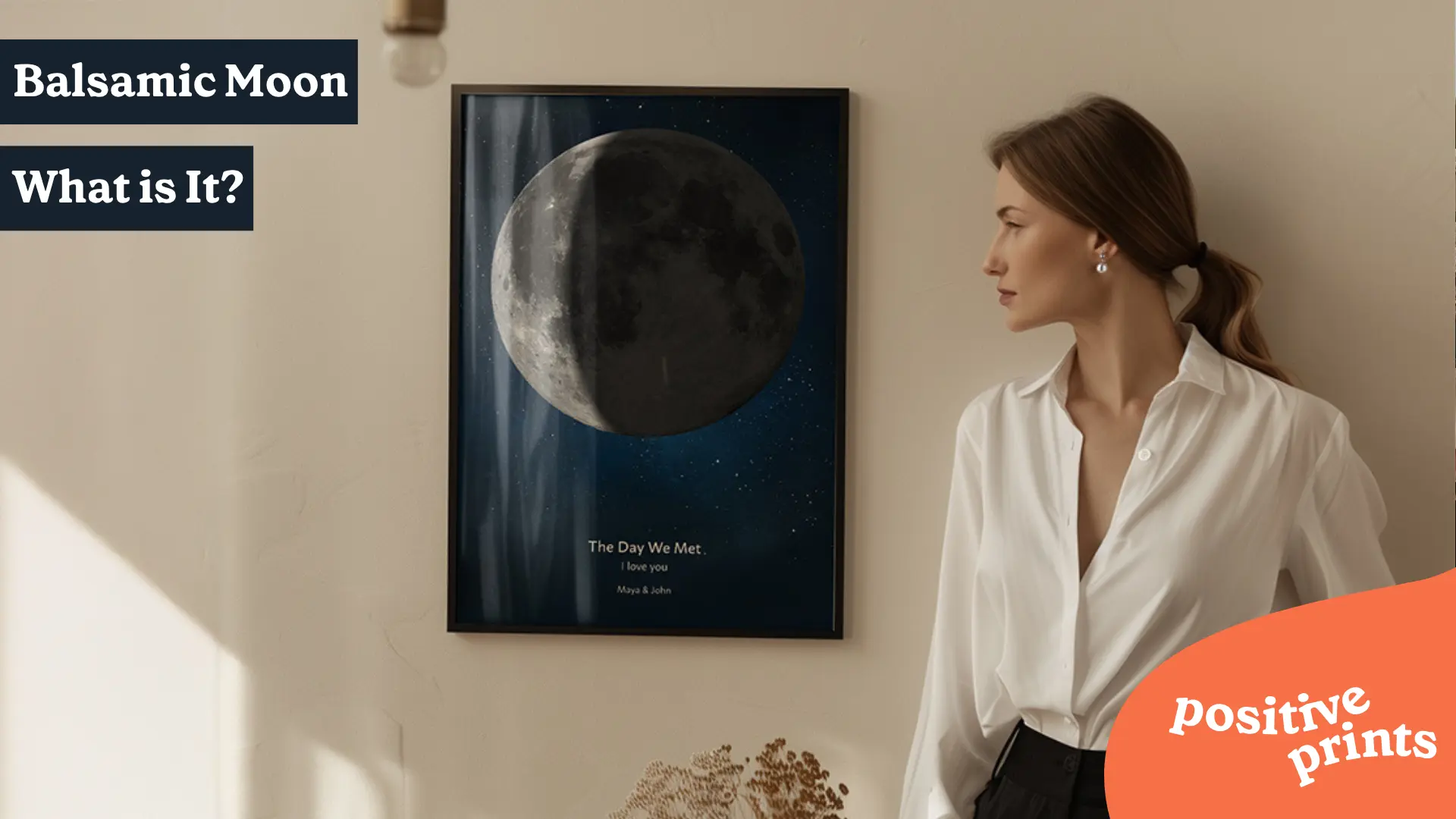
The Moon’s cycle is more nuanced than just “new” and “full.” One of its most subtle, yet powerful, moments is the balsamic moon – the quiet, twilight space at the very end of the lunar month. Understanding this phase can help you work with natural rhythms of rest, release, and renewal.
In this guide, you’ll learn what the balsamic moon is, when it occurs each month, how it differs from other phases, and simple ways to work with its energy. You’ll also see how brands like Positive Prints turn meaningful moon phases into personalized wall art and gifts that celebrate these liminal moments in life.
What Is the Balsamic Moon?
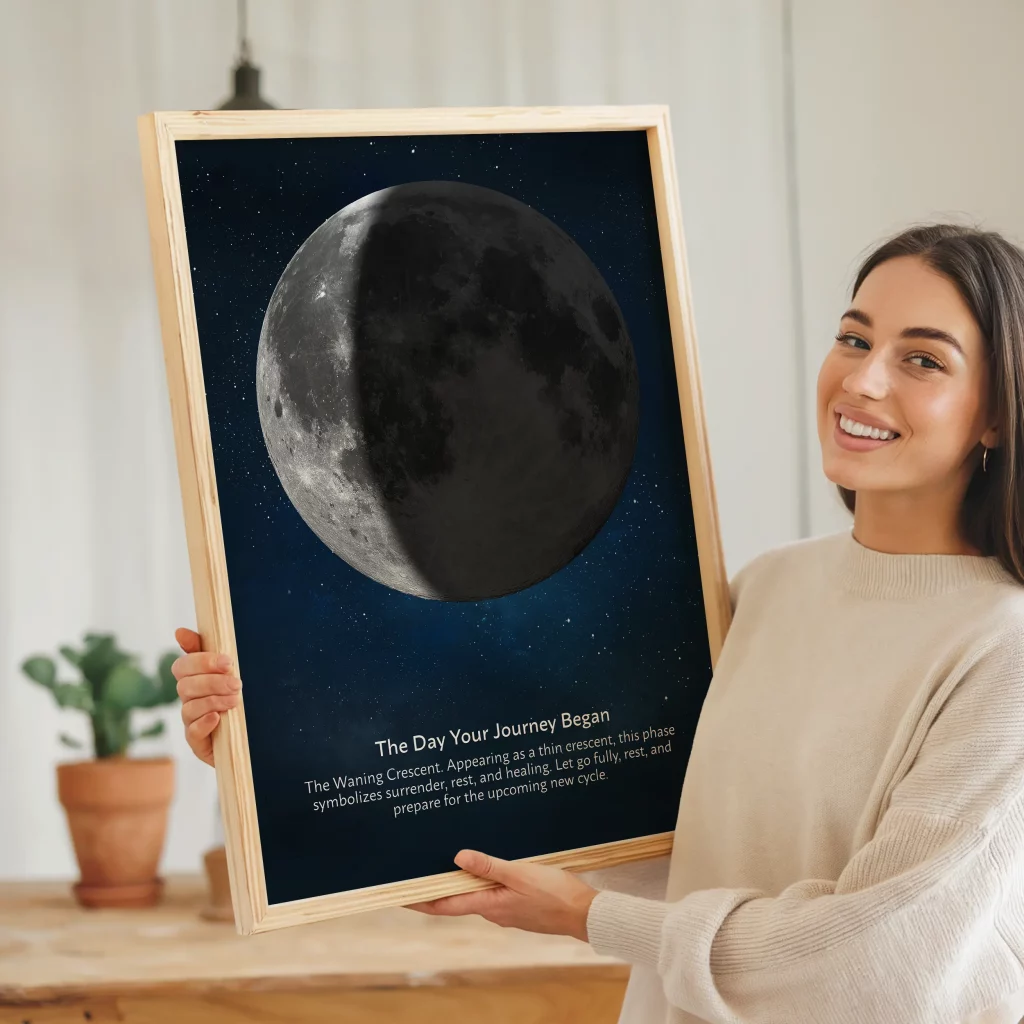
In modern astrology, the balsamic moon is the final part of the waning crescent phase, just before the new moon.
Astronomically, the Moon is:
- in its waning crescent stage – a thin sliver of light visible before dawn,
- drawing closer to conjunction with the Sun, when it becomes a new moon,
- showing only a small fraction of its surface illuminated.
In an 8‑phase lunar cycle, astrologers divide the 29.5‑day synodic month into eight segments of about 3.7 days each. The balsamic phase corresponds to the last 45° of the Moon’s orbit before it catches up with the Sun – roughly the final three to four days of the cycle.
Why is it called “balsamic”?
The word balsamic comes from balsam, meaning healing, soothing, or restorative. Astrologers use this term because this phase is seen as a time to:
- release and soothe what’s been stirred up during the month,
- heal and integrate experiences,
- rest and prepare for a new beginning.
Compared with the more dramatic full moon or the fresh start of the new moon, the balsamic moon is quieter and more inward. It’s less about big external events and more about subtle inner shifts.
Where the Balsamic Moon Fits in the Lunar Cycle
To understand the balsamic moon, it helps to see it in context of the full lunar cycle. A common way to break down the 29.5‑day cycle is into eight phases:
- New Moon – fresh start, planting seeds (0° from the Sun)
- Waxing Crescent – first visible sliver, early growth
- First Quarter – half‑lit, taking action and making decisions (90°)
- Waxing Gibbous – building, refining, preparing
- Full Moon – illumination, culmination (180°)
- Waning Gibbous – harvest, sharing, gratitude
- Last (Third) Quarter – re‑evaluation, turning inward (270°)
- Waning Crescent / Balsamic – releasing and completing (315° back to 0°)
In many astronomy references, the final stage is simply called waning crescent. Astrologers use the term balsamic for the very end of this waning crescent, when the Moon is within about 45° of the Sun and closing in on the new moon.
Waning Crescent vs. Balsamic Moon
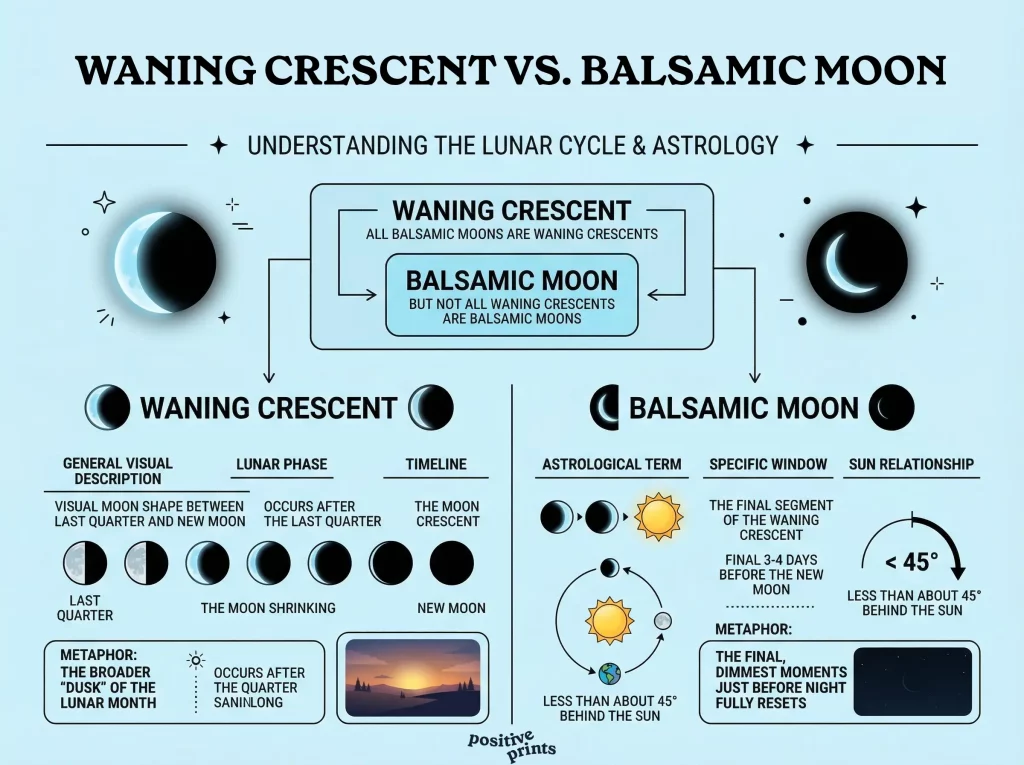
All balsamic moons are waning crescents, but not every waning crescent is necessarily within this tighter balsamic window.
- Waning crescent: general visual description of the Moon’s shape between last quarter and new.
- Balsamic moon: astrological term for the last segment of that waning crescent – the final 3–4 days before the new moon, when the Moon is less than about 45° behind the Sun.
Think of the waning crescent as the broader “dusk” of the lunar month, and the balsamic moon as the final, dimmest moments just before night fully resets.
When Does the Balsamic Moon Occur?
The balsamic window each month
Because the Moon’s synodic cycle (new moon to new moon) averages about 29.5 days, dividing it into eight equal parts yields phases of about 3.7 days each. The balsamic moon makes up roughly the last 3–4 days before each new moon.
During this time:
- the Moon is a thin waning crescent,
- it typically rises before dawn and sets in the afternoon,
- its illumination drops below about 20–15% and continues decreasing until it reaches 0% at the new moon.
Astrology sources often describe these three to four days as the monthly “sleep time”, when vitality is replenished and the current cycle winds down.
Why the exact timing varies
The exact timing of the balsamic moon changes every month because:
- the Moon’s orbit is slightly elliptical and irregular, so the length of a synodic month can vary by several hours,
- phase times are given in Universal Time (UT), but your local time zone shifts the calendar day and hour when you experience them.
As a result, one month’s balsamic period might feel closer to three days, another closer to four – and the clock times of the new moon and the preceding balsamic window will differ by location.
How to find the balsamic moon for your location
For most people, you don’t need exact degrees to work with this phase. Use this simple approach:
- Look up the next new moon.
Use a trustworthy lunar calendar, sky app, or astronomy website. You can also learn more about what it means to be born under a new moon, which helps put the balsamic phase into context. - Count back three to four days.
Those days, especially when the Moon is labeled waning crescent and appears very thin, are your balsamic window. - Notice the visible crescent.
Weather and latitude permitting, the balsamic moon is a slender crescent low in the pre‑dawn sky.
If you want more precision, astrology apps and ephemeris tools can show Sun–Moon degrees so you can see exactly when the Moon is 0–45° behind the Sun, which marks the balsamic phase in many astrological systems.

Balsamic Moon Meaning and Energy
Across modern astrology and spiritual writing, the balsamic moon carries a consistent set of symbolic themes.
1. Release and letting go
The balsamic phase is widely seen as a time to shed what no longer fits: habits, stories, commitments, or emotional baggage that has run its course during the current lunar cycle.
Rather than forcing closure, this phase invites gentle unhooking – loosening your grip on what is clearly ready to end.
2. Completion and closure
Astrologers describe the balsamic moon as a period for completion as well as release. It’s akin to turning in the last assignment, sending the final email, or tying up loose ends before you close a chapter.
This doesn’t always look dramatic. Often it’s small, practical completions – finishing a lingering task, having a needed conversation, or quietly deciding, “I’m done with this.”
3. Rest, retreat, and low energy
Many people notice a natural dip in energy during the balsamic days. Astrodienst calls this the Moon’s monthly “sleep” phase, when vitality and spirit are replenished before the next cycle begins.
If you feel more tired, introverted, or less motivated, you’re not doing anything wrong. This phase encourages:
- more sleep and downtime,
- fewer high‑stakes commitments,
- gentle, restorative activities.
4. Integration and reflection
After the activity of waxing and full‑moon phases, the balsamic moon is when experiences settle in. It’s a time to:
- digest what happened over the past month,
- notice patterns and lessons,
- decide what you want to carry forward and what you’ll leave behind.
5. Surrender, trust, and the unknown
This is a liminal space: the old cycle is ending, but the new one hasn’t visibly begun. Many astrologers frame it as a period of surrender and trust – living in the “in‑between” without yet knowing what’s next.
Rather than pushing for answers, you might:
- sit with uncertainty,
- practice acceptance,
- trust that clarity will come after the new moon.
6. Healing and soothing
The name balsamic itself evokes healing and balm. This phase is associated with:
- emotional healing, especially around grief, endings, or old wounds,
- forgiveness – of others or yourself,
- a sense of spiritual cleansing before new growth.
7. Intuition, dreams, and inner guidance
Balsamic periods are often described as dreamy and intuitive. People report:
- more vivid dreams,
- stronger gut feelings,
- a sense of connection to the unconscious or “subtle” realms.
It’s a receptive time to listen rather than to push – to pull tarot or oracle cards, note dream symbols, or simply pay attention to inner nudges.
How to Work With the Balsamic Moon Phase
There’s no single “right” way to honor the balsamic moon. Think of these ideas as invitations, not rules. Choose what feels nourishing and sustainable.
1. Build in extra rest
- Aim for earlier bedtimes or slower mornings.
- Say “no” to non‑essential commitments.
- Swap intense workouts for gentle movement like stretching, walking, or restorative yoga.
Honoring your body’s cues during this low‑tide time can make the next lunar cycle feel more energized.
2. Journal for closure and release
Set aside a short journaling session during the balsamic days and reflect on the past month:
- What themes or stories repeated themselves this cycle?
- What am I ready to let go of – habits, beliefs, expectations, or roles?
- Where did I overextend myself? What boundaries want to be firmer next time?
You might end your writing with a simple line like, “I release what no longer serves me and make space for what’s next.”
3. Gentle forgiveness or cord‑cutting rituals
If you feel called, create a simple ritual:
- Write a letter (that you don’t need to send) expressing what you’re releasing or forgiving.
- Safely burn, tear, or bury the paper while acknowledging the ending.
- Visualize any energetic cords to people or situations softening and dissolving.
The emphasis is on compassion, not force – you’re not erasing the past, just loosening its grip.
4. Light decluttering and simplifying
You don’t need a full‑scale overhaul. Instead, think small and symbolic:
- Clear your nightstand, desk, altar, or one drawer.
- Archive or delete old files and emails related to projects that are complete.
- Refresh a small corner of your home to reflect the space you’re making mentally and emotionally.
These modest actions embody the balsamic theme of clearing space for the new.
5. Quiet spiritual or self‑care practices
This phase pairs well with soft, introspective practices, such as:
- meditation or breathwork,
- restorative or yin yoga,
- a warm bath with calming salts or oils,
- prayer, chanting, or quiet contemplation.
Keep things simple; the goal is to soothe the nervous system and create room for insight.
6. Track dreams and intuitive nudges
During balsamic nights, keep a notebook or notes app by your bed.
- Jot down dream fragments upon waking.
- Note any repeating symbols or feelings.
- If you use tarot or oracle cards, pull one with questions like, “What am I releasing?” or “What’s quietly germinating for me?”
Over time, you may notice that balsamic periods bring particularly symbolic or clarifying dreams.
7. Pre‑seed intentions (without pushing)
Full‑blown manifestation work is often saved for the new moon itself. During balsamic days, focus instead on listening and sensing:
- What qualities do I want more of in the next cycle (e.g., ease, creativity, courage)?
- If I didn’t have to drag old baggage forward, what might I try?
You don’t need to lock in plans yet. Simply notice what starts to whisper, so that when the new moon arrives, your intentions can emerge more clearly.
Balsamic Moon vs Other Waning Phases
All waning phases carry a theme of releasing and winding down, but each has a different flavor. Here’s a simple comparison you can keep in mind:
| Phase | Approx. timing in cycle | Main themes |
| Waning Gibbous | Just after full moon | Harvest, sharing, gratitude, teaching |
| Last Quarter | Around 3/4 of the cycle (270°) | Re‑evaluation, decisions, course‑correction |
| Waning Crescent | From last quarter toward new moon | Letting go, inward focus |
| Balsamic Moon | Last 3–4 days before new moon | Deep release, rest, integration, liminal space |
In other words:
- Waning gibbous: you’re distributing what you’ve learned or created.
- Last quarter: you’re making adjustments and choices.
- Waning crescent: you’re withdrawing and loosening attachments.
- Balsamic moon: you’re in the deepest point of surrender and rest, standing at a threshold between cycles.
Balsamic Moon and Personal Meaningful Moments
The balsamic moon doesn’t always coincide with big, obvious events. Often, it aligns with quiet turning points:
- the last night in a beloved home before a move,
- the final day at a job before a new chapter,
- a peaceful goodbye, or a moment of private closure,
- the calm before a major life change.
These subtle thresholds are powerful in their own way. They’re moments when you know something is ending, even if the world hasn’t seen the new beginning yet.
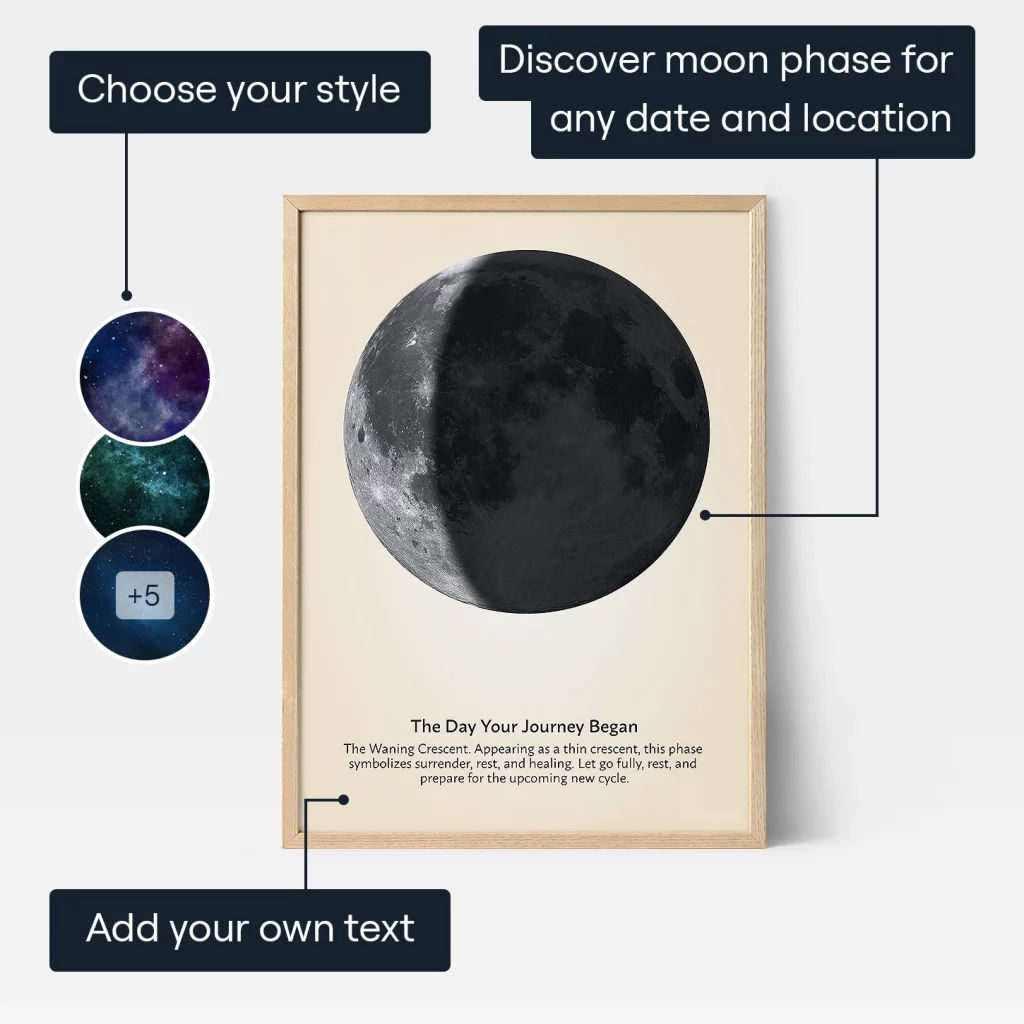
This is part of what makes the Moon such a rich symbol for memory. Brands like PositivePrints create Personalized Moon Phase posters and gifts that capture the exact appearance of the Moon on a specific date and location – whether that’s a birthday, an anniversary, or one of these quiet balsamic‑style turning points.
If a deeply personal closing moment marked the end of a chapter in your life, a Custom Star Map can be a meaningful way to honor it and the wisdom it brought.
Simple Balsamic Moon FAQ
Is the balsamic moon the same as the waning crescent?
Not exactly, though they overlap. Waning crescent is a general name for the last crescent phase before the new moon. Balsamic moon is an astrological term for the final segment of that waning crescent, when the Moon is within about 45° of the Sun and just a few days from new.
How long does the balsamic moon last?
In many modern systems, the balsamic phase lasts about three to four days before the new moon. Because the Moon’s orbit isn’t perfectly regular, the exact number of hours can vary slightly from month to month.
Is the balsamic moon good for manifesting?
Most teachers see the balsamic moon as better for releasing than for active manifesting.It’s a time to clear space, rest, and integrate. The new moon and early waxing crescent are typically favored for setting new intentions and calling in what you want to grow.
Can I see the balsamic moon with the naked eye?
Often, yes – but it’s subtle. The balsamic moon:
- appears as a slender waning crescent,
- is usually visible in the pre‑dawn sky, low on the horizon,
- can be washed out by city lights, haze, or clouds.
As the Moon approaches the exact new moon (0% illumination), it becomes much harder or impossible to see until the next waxing crescent appears.
How do I know if I was born under a balsamic moon?
To find your natal moon phase, you need your birth date, time, and location:
- Use an astrology website or app that calculates natal charts and moon phases.
- Look for your natal Moon–Sun angular relationship or a label like “waning crescent” or “balsamic.”
People born under a balsamic moon are often described as old souls, oriented toward closure, healing, and spiritual integration.
Conclusion
The balsamic moon is the lunar cycle’s quiet, liminal closing chapter – the final waning crescent just before the new moon. It typically lasts three to four days, when the Moon is a slender pre‑dawn crescent and the month’s experiences are being absorbed, released, and transformed.
Working with this phase doesn’t require elaborate rituals. Simply resting more, reflecting on the past month, letting go of what’s complete, and listening closely to your intuition can align you with its soothing, healing quality.As you start to notice the balsamic moon each month, you may also become more aware of the quiet thresholds in your own life – the endings that don’t make headlines but reshape you from the inside out. If you feel drawn to honor one of those moments visually, PositivePrints offers a beautiful way to turn a specific moon phase and date into personalized wall art or a heartfelt gift, like The Moon on the Night We Met Print or Moon and the Stars from your special day, celebrating both endings and new beginnings in the night sky.