






Posted on

What is a Star?

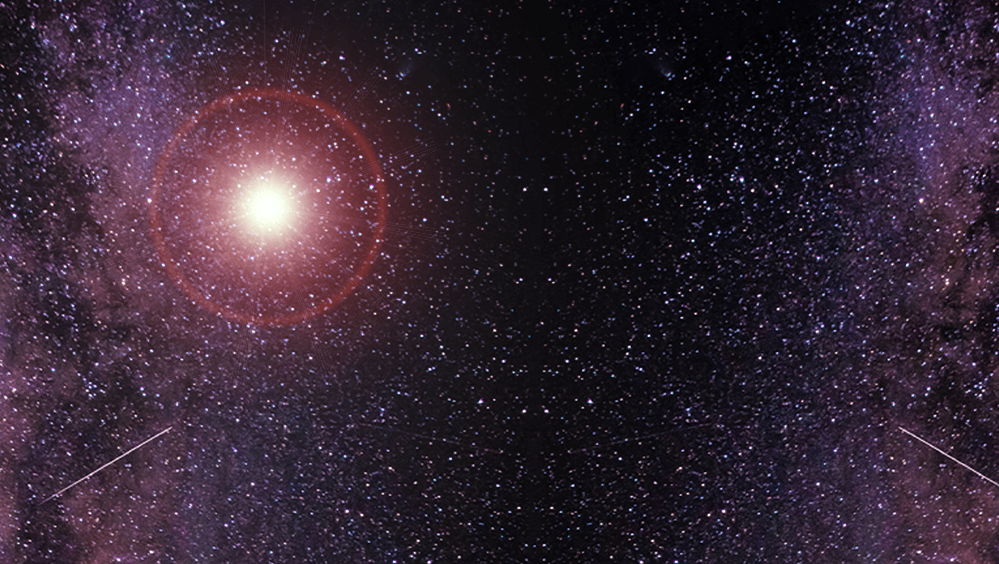
“Twinkle, twinkle little star, how I wonder what you are. For some, this may be just a childhood tune, one that gets kids thinking about the little twinkling diamonds in the sky. But many of us don’t outgrow this curiosity when we reach adulthood. It’s not uncommon to wonder, what is a star?

To understand this, we tend to look to the closest star to us: our sun. We know that stars can be different colors and are hot balls of burning gas. They give us heat and light, and provide the very essence of life here on earth. Without our sun, life as we know it couldn’t exist.

What you might not realize is that our sun isn’t a “typical” star. It’s actually a dwarf star, meaning it’s smaller and less intense compared to most of the stars in the universe. 

So, what is a star? Here’s a closer look at stars and why they matter. 

Fun Facts About Stars

To get an idea of what stars really are, let’s look at some fun facts about stars:

  • Stars are giant balls of gas that form when particle clouds in space start to group together and spin. As they spin, they take on mass, which increases their heat.
  • It takes millions of years for particle clouds to turn into stars.
  • Stars are mostly made of hydrogen and helium. 
  • Particle are held together by their own gravity.
  • The biggest stars exhaust their energy supply within a few million years.
  • Smaller stars, called dwarf stars, use their energy more efficiently and can last for billions of years.
  • Our sun is a dwarf star and is believed to be “middle aged.”

Read more in our article about fun facts about the stars.

What Does a Star Really Look Like?

In preschool, you were probably taught that a star is a five-point shape, almost as though someone smashed together some triangles. But real stars do not look like this, much like a heart-shaped Valentine’s box of chocolates doesn’t look like the heart inside your body.

Stars are actually ball-shaped, just like our sun. They’re almost perfect spheres, and you can’t really see with the naked eye any flaws. Like planets, stars come in many sizes and temperatures. Its size, however, isn’t always indicative of its temperature.

How Do Stars Form?
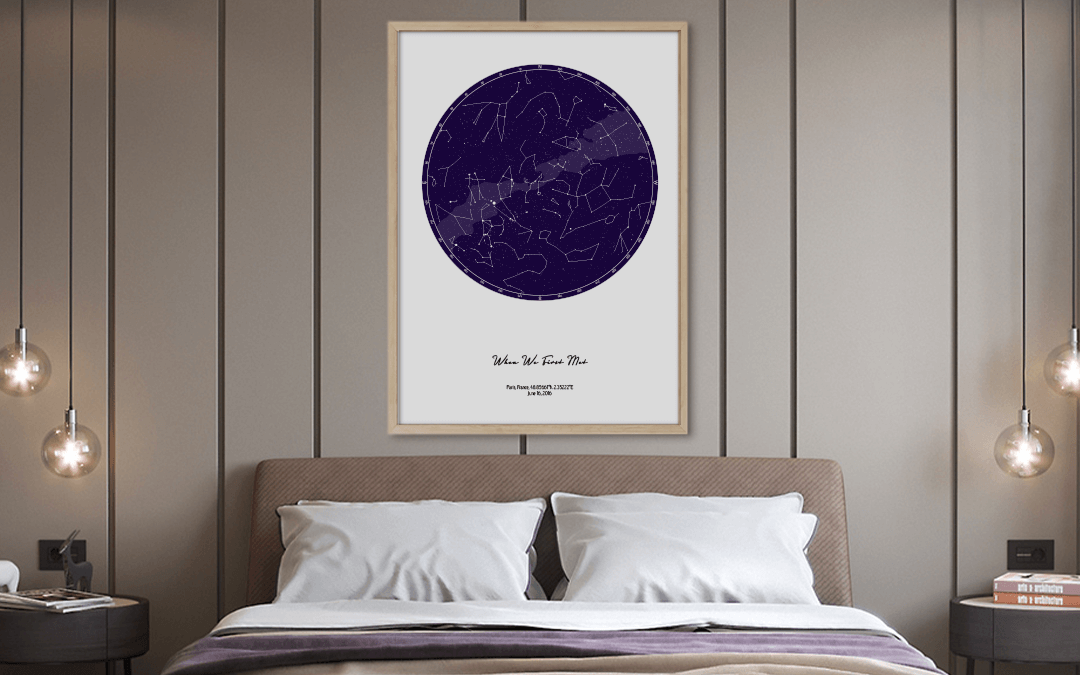
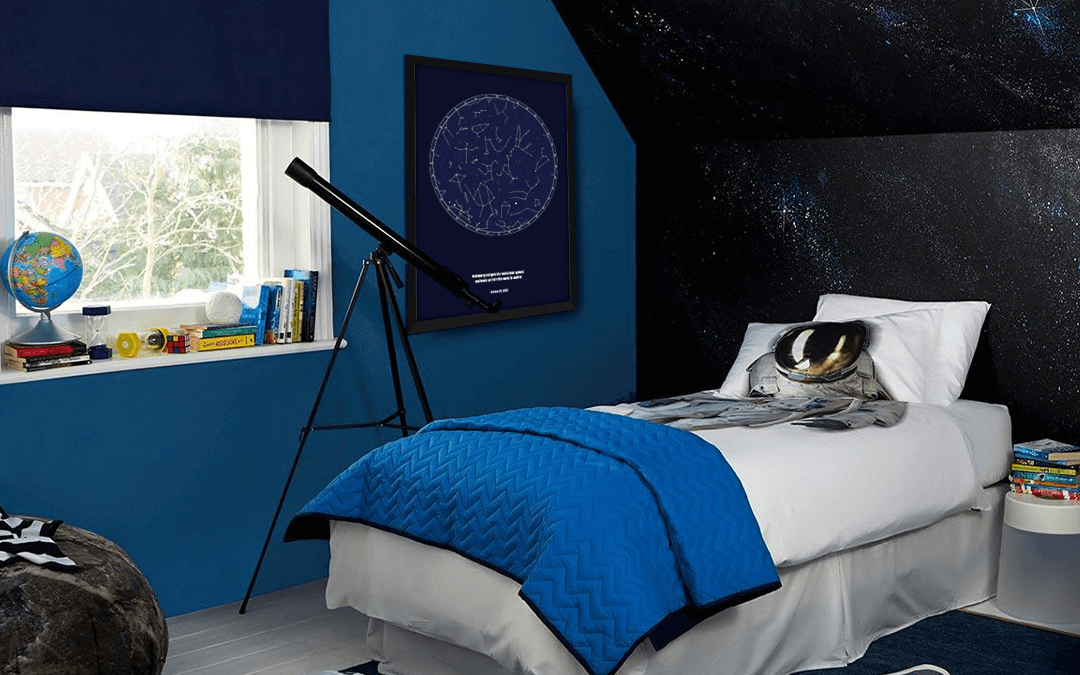
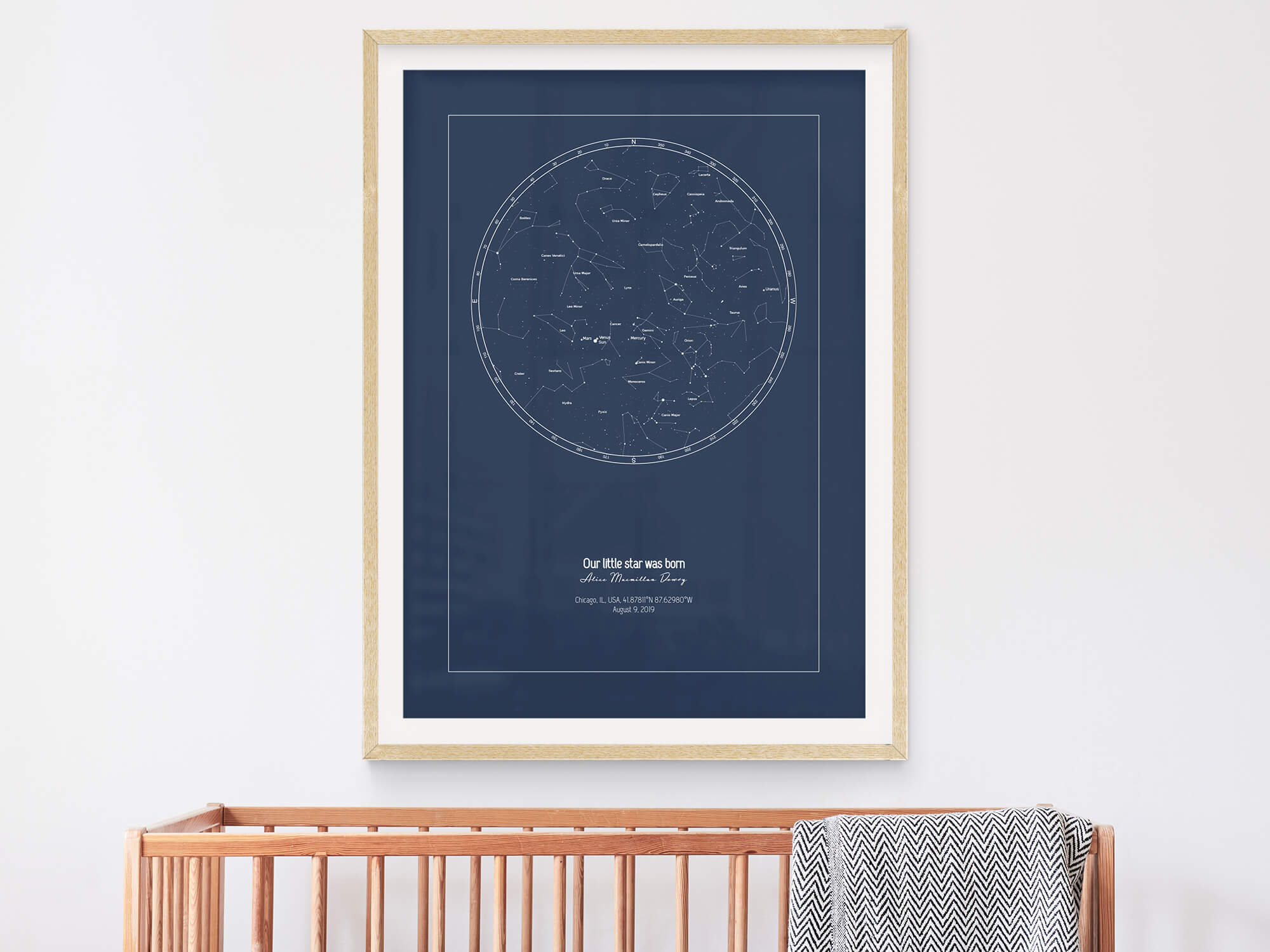
Custom color star map above bed
If you have a star enthusiast in your life, a custom star map poster makes the perfect gift.

We’ve already touched on this a little bit, but for the sake of more detail, stars form when clouds of particles in space are pushed together and initiate a swirling motion. 

In every galaxy, there are millions of stars. In between these stars are clouds of gas and dust. These clouds are like the incubators for new stars to form. The substances in these clouds move in all directions. Imagine a group of children running around on a school playground. 

Sometimes, regions start to collect more space dust and molecules than others, so mass is unevenly distributed. If too much starts to collect in a single place, that region will start to collapse from the weight of its own gravity.

As the collapse occurs, the temperatures start to rise. This is true according to physics: the more matter you have in a space, the hotter that space becomes. It’s like comparing a room full of people to one that’s empty: the one full of people will be warmer.

The dense gas and particles start to form the core of what will eventually become the star. Over time, this core starts to contract, which increases the density of the matter. As the contractions continue, along with the constant motion of gas and dust in the region, the whole system starts to rotate. 

Then, as the mass starts to heat up, it eventually gets hot enough to initiate a nuclear fusion reaction, which turns the mass into a bona fide star. This is the first point at which a star is visible. 

Why are Stars Important?

To understand the role of stars in our universe, we need only look at our very own star, the sun. Without the sun, life on earth could not exist. The sun provides us with energy, including Vitamin D. It also gives our plants energy and life. Without plants, we wouldn’t have a food source. Plants also make the oxygen we breathe, so we also wouldn’t have an air source.

In addition, learning about the stars has allowed humans to navigate our journey through space. Stars help us learn about the universe around us. And since knowledge is power, we may be able to better understand our own existence simply by observing the heavenly bodies that we’ll never be able to visit.

The Perfect Star Gifts for Celestial Enthusiasts

If you have a star enthusiast in your life, order a star map gift. A personalized star map recreates the night sky on the date of your choosing. It’s a great way to commemorate a milestone event in someone’s life and show them how the universe came together for them on that day. 
Posted on

Map Gifts: Highlight Your Unique Journeys

Trying to find a unique, romantic gift can often be a challenging pursuit. But have you considered a custom-made gift? One of the most innovative gift ideas in this area is a map poster pillow. This gift idea allows you to put a significant location onto a pillow, helping you relieve your pleasant memories. For example, you might want to put the places that you went to on your first date or the location that you proposed to your partner. Let’s take a closer look at this custom map gifts and some of the reasons why it can make an excellent choice for those looking for a unique present. 

Show the Story of Your Relationship

The relationship between every couple will evolve in a slightly different way. By choosing a custom made gift, you’ll be able to get something that will highlight your unique journey. For example, you might want to start by presenting the map of the area where you first met. Or the place where you had your first date. Another popular option is the location where you proposed. For married couples, you can show the area where your wedding ceremony occurred. As you look at the maps of the site, you’ll be able to reminisce about those moments. As you look at the aerial view, you might also spot details that you might not have noticed before. 

A map of Lisbon hanging on the wall in a nice, bright apartment interior

Multiple Design Options

There are numerous types of design options that you can explore to allow you to customize the experience fully. For example, you can pick the kind of colors that you use. There are six colors available from which you can choose. However, if none of these appeals, you can choose to customize it further. You might also want to consider the shape of the print. You can choose a round or square map. However, the most romantic custom map gifts shape is the heart option. By selecting these designs, you’ll be able to create an incredible custom map poster, which is guaranteed to appeal to your partner. 

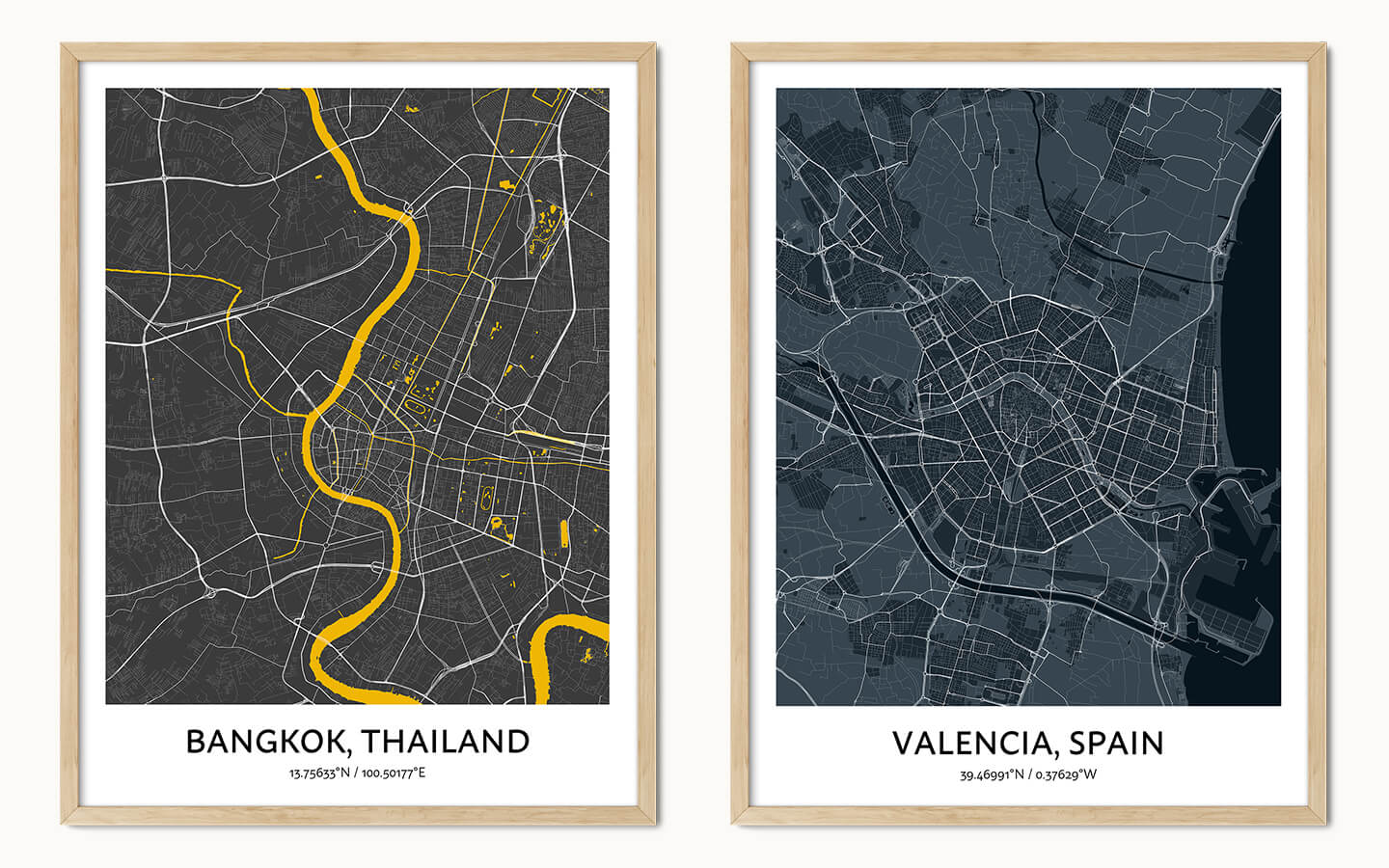
Bangkok and Valencia custom map gifts framed and hanged on the wall

Interactive Design

To make sure that you get the exact right area, the map on the design page is interactive. Being interactive will allow you to move it into the right spot. You’ll also be able to zoom in to better highlight the specific area where the event occurred. This level of interactivity, and the ease at which you can create a design, is one of the aspects that sets a custom map poster.

Washington map poster in a black frame as a wall decoration in bright apartment

The Perfect Custom Map Gifts Idea

When you choose a custom map gifts, you’ll be giving something that will remind your partner of all the good times you shared, and signal that you will be creating many more memories for years to come. The high-quality design and durable construction ensure that it will be able to last for a long time, allowing you to display them in the living room or bedroom. This gift makes the perfect choice for a birthday, anniversary, or to celebrate a proposal. So, make sure to head to Positive Prints and order your custom pillow or poster today. 

Posted on

Astronomy vs Astrology: What’s the Difference?

Astronomy and astrology are often used interchangeably. But make no mistake that the two are not the same. The two share similar roots, and both focus on the sky and stars above us. But that’s about where the similarities end. Here’s a closer look at the astronomy vs astrology comparison and why the difference matters.

Astronomy vs Astrology: A Brief Definition

Simply put, astronomy is the science of studying the stars and other components of the universe. Scientists who study astronomy look at the movement patterns of planets. They study the properties of celestial bodies, and examine their position in the sky.

Astrology is based on astronomy. It uses what astronomers have discovered and attempts to provide insight into how these celestial bodies influence life on Earth. For example, it takes into consideration the position of planets at any given time and makes predictions about how that positioning can influence decisions, behaviors, moods, and more. 

The Science of Astronomy

It used to be that astronomy and astrology were considered one in the same. Then, during the Age of Reason, astrology ideas started being rejected as superstitions. 

Today, astronomy is a bona fide science. Astronomers dedicate their careers to looking to the heavens to identify new stars and planets. Study their origins, predict their movements, and make logical assumptions. Unlike astrology, astronomers can support their ideas with proof. This is why astronomy findings are widely accepted by other scientists, scholars, and general public. Even if they’re not experts in astronomy themselves.

The Pseudoscience of Astrology

Astrology isn’t technically a science. It’s more of a pseudoscience. It uses astronomy as a foundation to explain the impact of astronomical behaviors. Astrologists turn their explanations into horoscopes and other predictions based on individual zodiac signs. They believe that planetary positioning at any given time can impact. A person’s thoughts, feelings, and decisions. 

To be clear, astrology does have a scientific basis. Astrologists use the same vocabulary as their astronomer counterparts. Along with star charts, diagrams, and graphs that detect planetary positions at any given time. 

But unlike astronomy, there is no way to “prove” astrology beliefs. Many people who follow astrology say that their findings can be too general to be reliable. And when predictions do come true, some are inclined to see it as mere coincidences. 

But there are others whose experiences have been quite the opposite. Many consult their horoscopes to look for signs in their lives, provide direction, and explain why they’re feeling a certain way. 

How Astrology Uses Astronomy

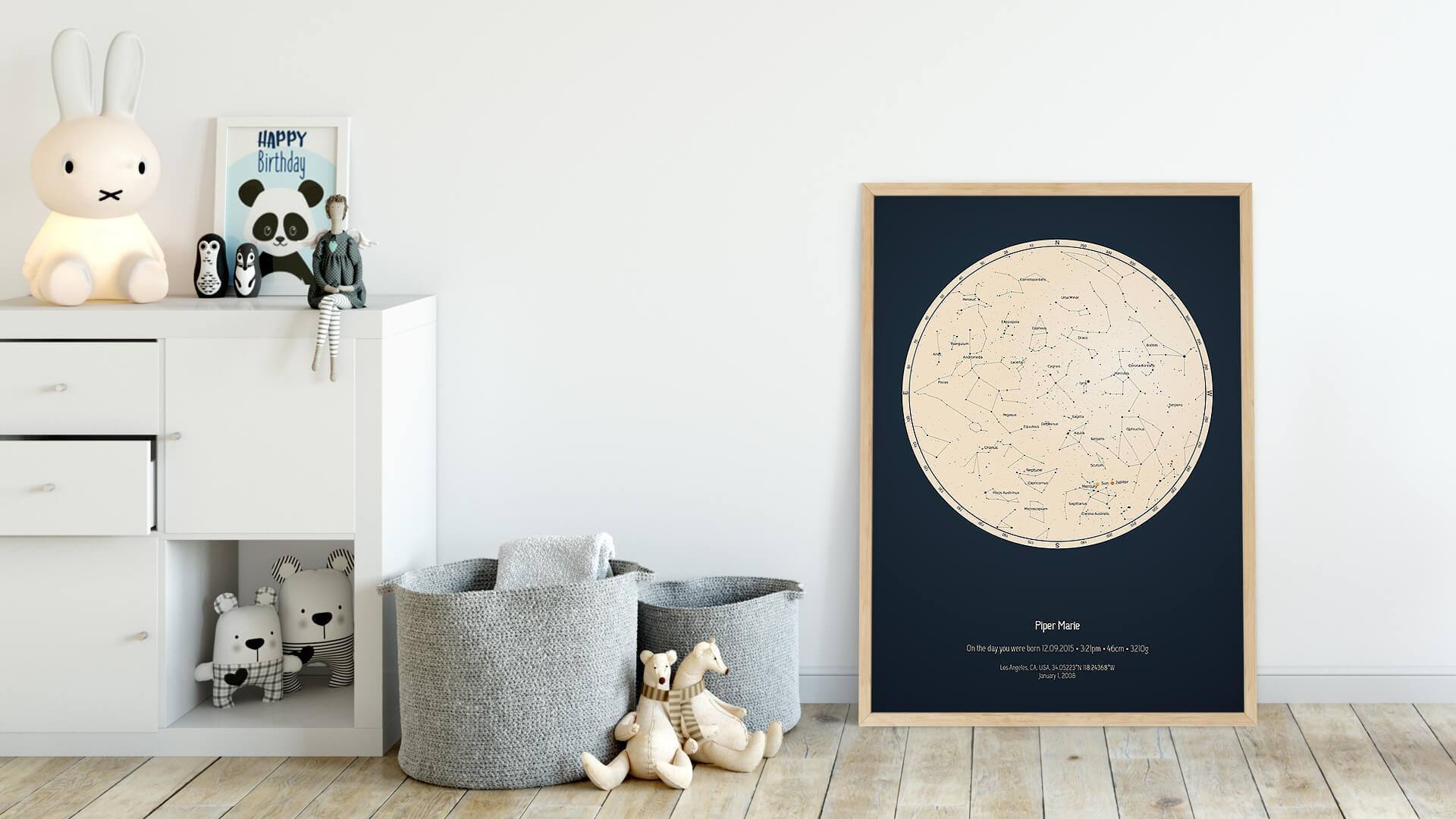
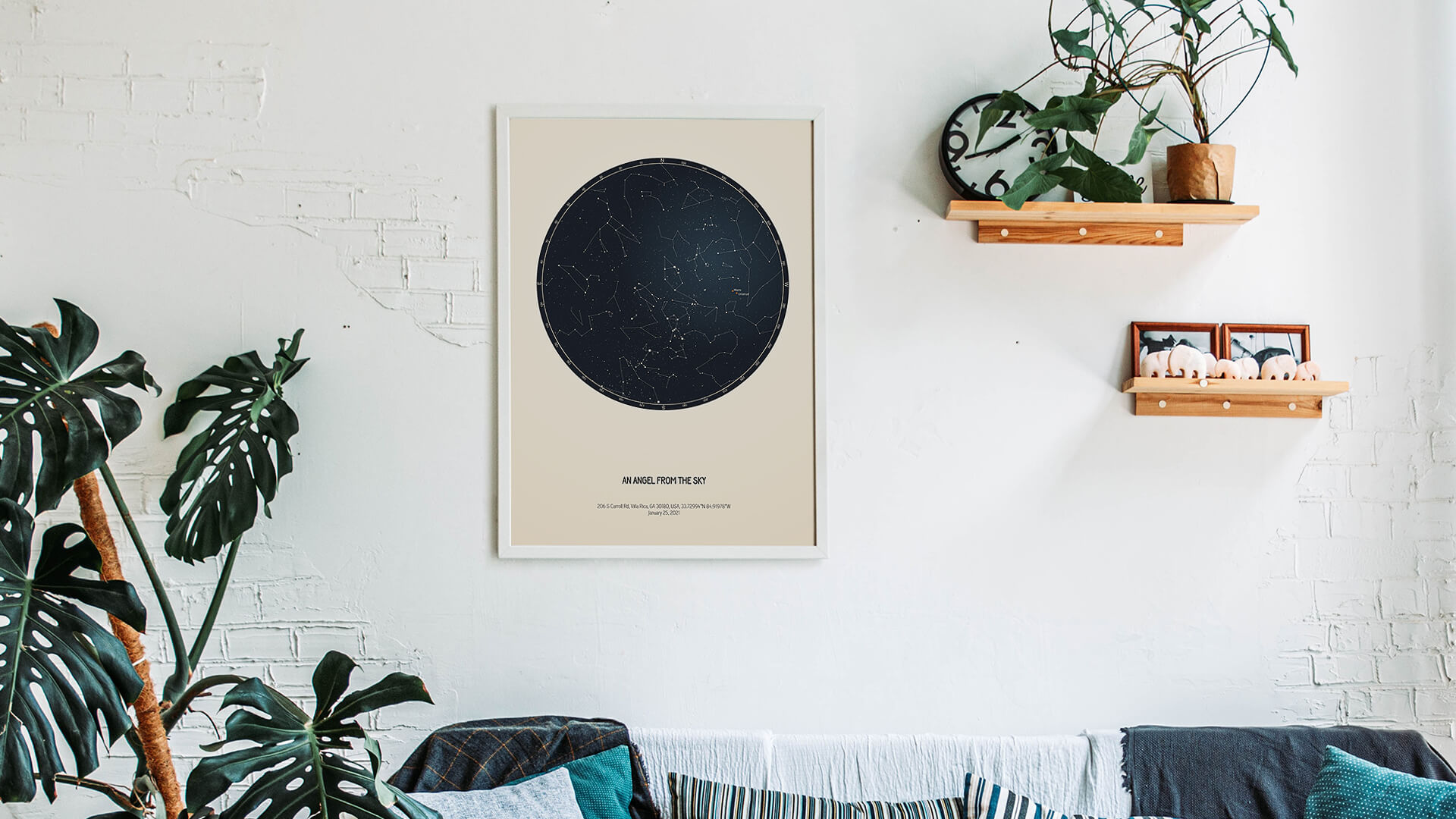
Star Map Poster in Kids room
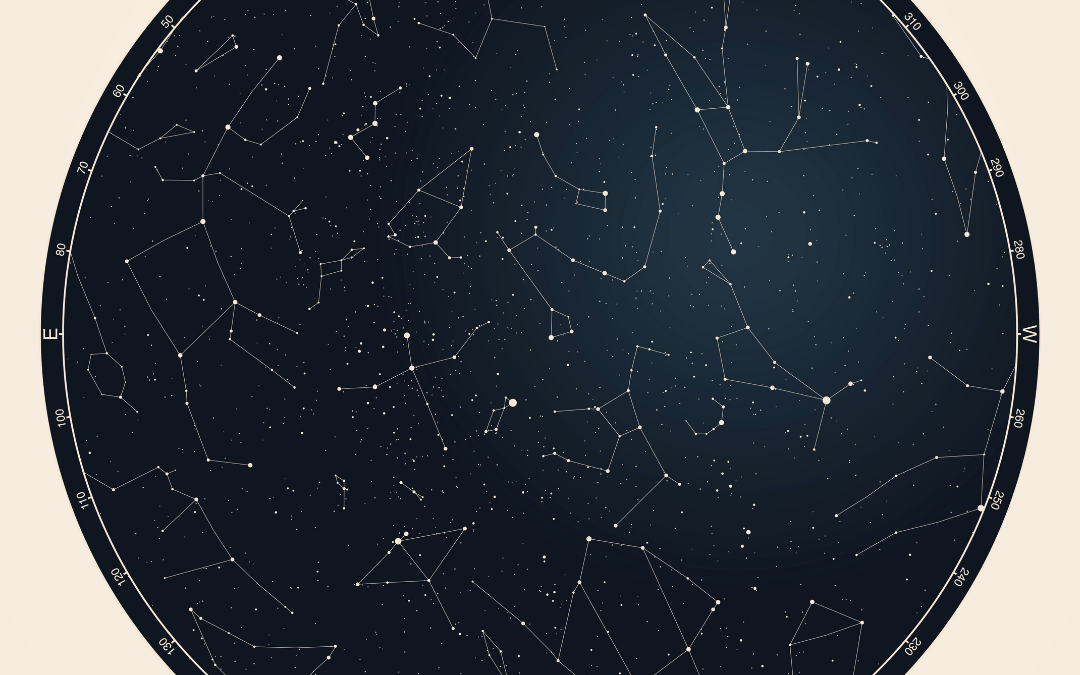
A star map is a representation of the stars in the sky on any given date.

One of the most valuable tools in astronomy and astrology are star maps. A star map is a representation of the stars in the sky on any given date. Algorithms create these maps based on previously established patterns so that an accurate map can be created for any date, even those in the future.

Future-looking star maps are used by astrologists to develop predictions for how planetary events will impact human life, usually according to their zodiac sign. The zodiac is commonly thought to be a component of astrology, but it’s also a tool used by astronomers. 

Zodiac Constellations

The zodiac is defined by the earth’s annual path around the sun. Throughout 12 distinct intervals, we see the sun against the same constellations throughout the year. This is why zodiac signs are commonly referred to as your “sun” signs. 

Astronomy tells us that these signs represent constellations that have the same names as the 12 zodiac signs. Aries, Taurus, Gemini, Cancer, Leo, Virgo, Libra, Scorpio, Sagittarius, Capricorn, Aquarius, and Pisces. From there, astrology takes over and tells us that the sun’s position against these constellations can have an impact on our personality traits at birth as well as our moods, behaviors, and actions throughout our lives.

There’s a lot of overlap between astronomy and astrology. So it’s no surprise that the two are used interchangeably. The most important thing to remember is that astronomy is a science that explains much of the “what” of our universe: it tells us factual information about celestial bodies and uses logic and proof to back up the claims. Astrology takes astronomy a step further to explain the impact of astronomy, findings that aren’t always widely accepted and are based more on speculation rather than cold, hard proof.

Star Maps in Astronomy and Astrology

Regardless of whether you love astronomy vs astrology or can’t wait to read your horoscope every day, everyone can enjoy a personalized star map. Star maps provide a detailed look at the night sky on a date of your choice. It’s up to you to decide if the stars and planets aligned for you on that very special day.

Start creating your custom star map here and bring the night sky into your home.

Posted on

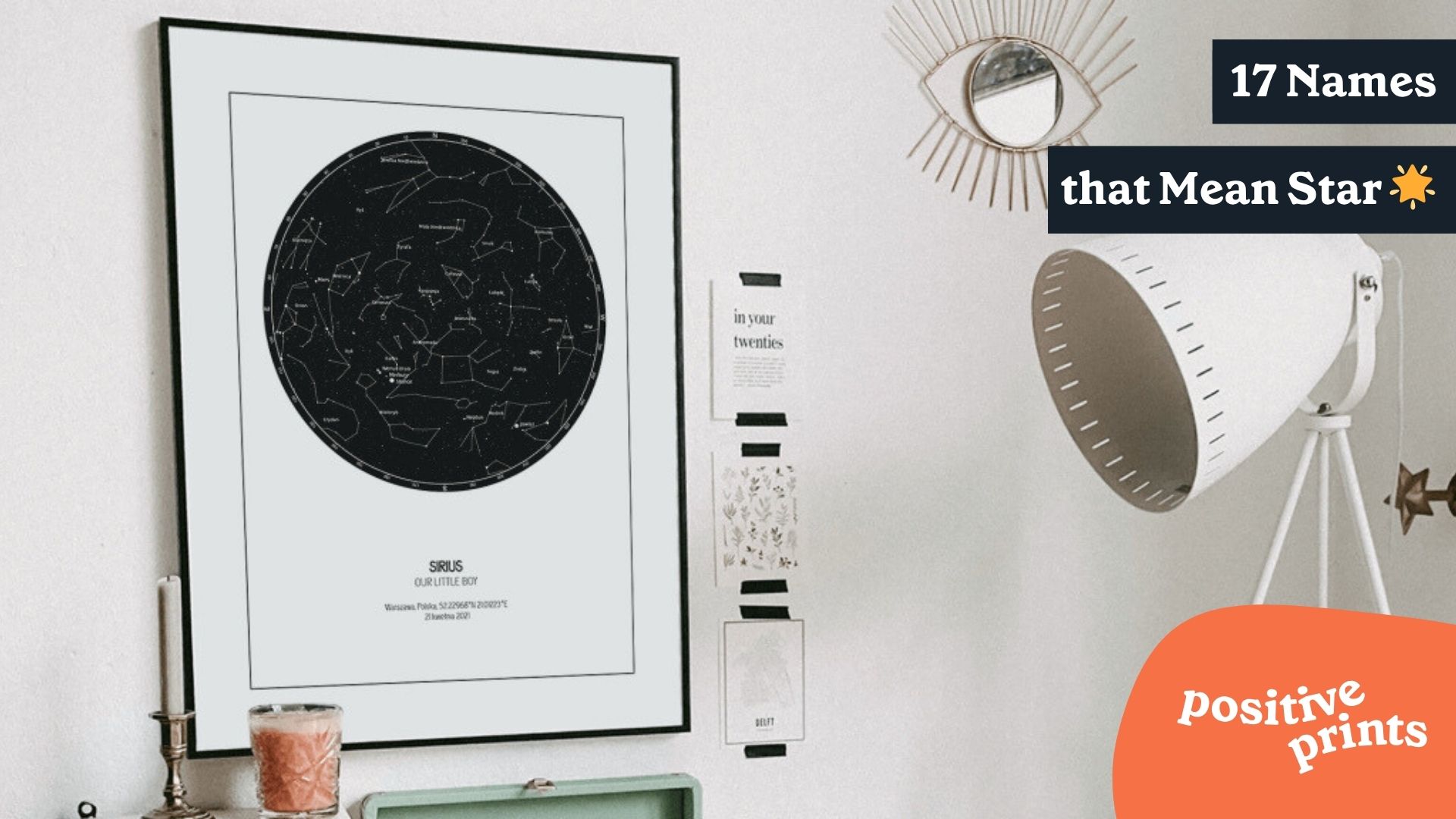
17 Names that Mean Star

17 Names that Mean Stars

Have you ever thought of names that mean Star? Let’s face it: we are all guilty of thinking our children are shining stars. That’s because they are (at least in our lives), and though we know deep down that the universe doesn’t revolve around them, we can’t help it feel how extra special they are and how much brighter they make the world.

This explains one reason why star names are so common for babies. Many parents want to give their child a name that means something to them. If you love astronomy and can’t take your eyes off the night sky, then naming your child after a star (or even Star itself!) can help you think of them every time you look skyward. 

Star names can take the form of “star” in different languages, as well as specific stars or constellations in our solar system. Here’s a quick peek at some of the most common names that mean “star” or otherwise relate to stars:

1. Aster (Unisex)

Many parents want to use a unisex name, especially if they are not finding out the gender of their baby before birth. Aster (sounds like astral), is a beautiful Greek name that literally means “star” and is suitable for a boy or girl. 

2. Realta (Unisex)

Another literal translation, Realta is the Irish word for “star.” Though it’s more commonly used for girls than it is for boys, the name is actually unisex.

3. Felis (Unisex)

Felis is the Latin word for “lucky,” like when people “thank their lucky stars.” It’s also the name of a specific star, commonly known as the cat star.

4. Indus (Unisex)

Indus is a unisex name inspired by the constellation of the same name. The constellation represents a river, which is symbolic of life itself. There’s also the famous Indus River, which flows through India, Pakistan, and Tibet.

girl names that mean star
Star names can take the form of “star” in different languages, as well as specific stars or constellations in our solar system.

5. Lynx (Unisex)

The name Lynx means “brightness,” such as gazing at the brightest star in the sky. Lynx is also a type of wildcat, which symbolizes agility and speed.

6. Pyxis (Unisex)

The Pyxis constellation is also known as the mariner’s compass. Suitable for both boys and girls, naming them after a wayfinding constellation could be symbolic of helping them find their life’s direction.

7. Arawan (Unisex)

The Thai name Arawan directly translates as “sunshine.” Our sun is our brightest star neighbor and represents life itself, making this name a favorite among star lovers. 

8. Astra (Girl)

A name that sounds like astral, Astra is the Greek word meaning “star,” or “from the stars.” It’s a beautiful way to say your little girl descended straight from the heavens.  

Star map of a baby with name that means star
Do these names inspire you? Try to create a personalized star map poster with the chosen name.

9. Estrella (Girl)

The Spanish word for “star,” estrella is as beautiful to hear as it is to say. The double L’s are pronounced as a “yuh” sound in the Spanish language, but non-Spanish families may choose to use the standard L phonetic.

10. Tara (Girl)

Tara is the Sanskrit word for star. It’s also a very common name in the English language, and many parents who have chosen this name may not understand its true meaning.

11. Nova (Girl)

In astronomy, a nova refers to a celestial event that creates the appearance of a bright new star, then fades over the course of several weeks or months. The appearance of a nova is a dramatic event, which is why the name is so common for excited new parents.

12. Nebula (Girl)

A nebula is the cloud of dust and gas in space that forms between stars. In Latin, nebula translates into “little cloud.” 

13. Hoshi (Boy)

The Japanese word for star, Hoshi can be used as a first name or surname. Many parents choose to use this or other star names in languages that are different from their own. Bonus tip: a girly variety of this name is “Hoshiko.”

boy names that mean star
Many parents want to give their child a name that means something to them.

14. Sirius (Boy)

A name meaning burning (like a star burning in the sky), Sirius is most commonly known as the brightest star in the sky. It’s also a binary star, which has a faint white dwarf star as its companion.

15. Caelum (Boy)

Caelum literally means heaven in Latin, the place where all stars shine. It’s also been translated to mean chisel, which would be fitting for any aspiring builder, artist, or entrepreneur. 

16. Draco (Boy)

Also known as the dragon constellation, Draco is one of the largest constellations in the night sky. It alludes to a sense of power and craftiness.

17. Orion (Boy)

Another famous constellation distinguished by a line of three stars, Orion represents a mythical Greek hunter and is often depicted facing a charging Taurus bull. The name itself means “boundary,” which can signify a sense of power.

Do these names inspire you? Now try to create a personalized star map poster with the chosen name.

Posted on

10 Ideas for Your Celestial Wedding

You’ve finally decided to walk down the aisle together and say I Do in front of family and friends. A love like yours has been written in the stars for ages, and the universe aligned just to bring you two together. Now, it’s time to start planning your wedding, and nothing could be more fitting than a celestial wedding theme.

If you need inspiration and ideas for your celestial wedding, we’ve got you covered. Take a look at our top picks to make this star-studded event one you’ll treasure for a lifetime:

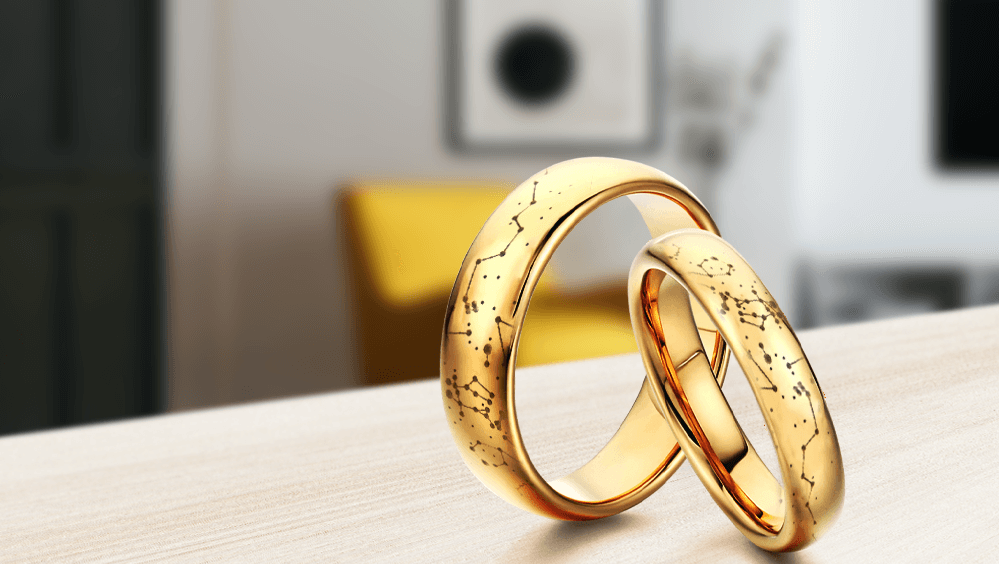
1. Custom Star Map Wedding Rings

Though diamonds are a girl’s best friend, originality and sentimentality are also top-ranking factors. For your wedding bands, consider getting matching custom engraved star map rings. If you’ve made a digital custom star map poster, you can send the file to a ring designer that can infuse your star map details into your ring. It’s truly a one of a kind way to thank the universe for bringing you together.

2. Star Map Guest Book

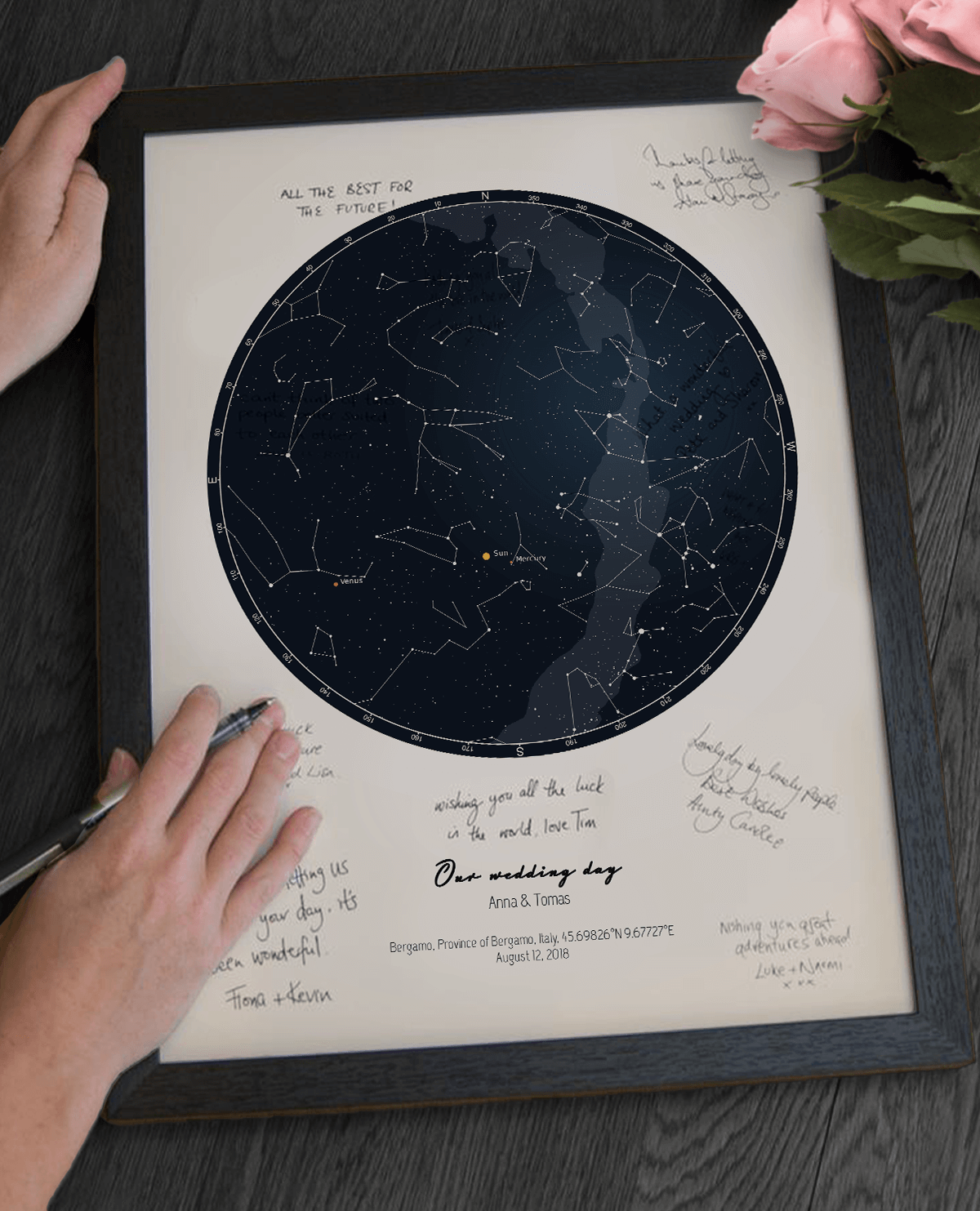
Star Map Guest Book
Our posters go up to 24×36 inches (or 70×100 cm), so there’s plenty of space for everyone to sign.

Ditch the traditional guest book that usually ends up with more empty pages than signed ones. Instead, print a star chart poster and have all of your guests sign it. Night sky posters use the date and location of your choice to recreate what the night sky looked like on that special day. You could choose your first date, first kiss, the night you finally became engaged, or even look forward and select the night of your wedding. 

Our posters go up to 24×36 inches (or 70×100 cm), so there’s plenty of space for everyone to sign. Prop it up on an easel and use silver, gold, and other metallic marker colors for the signatures.

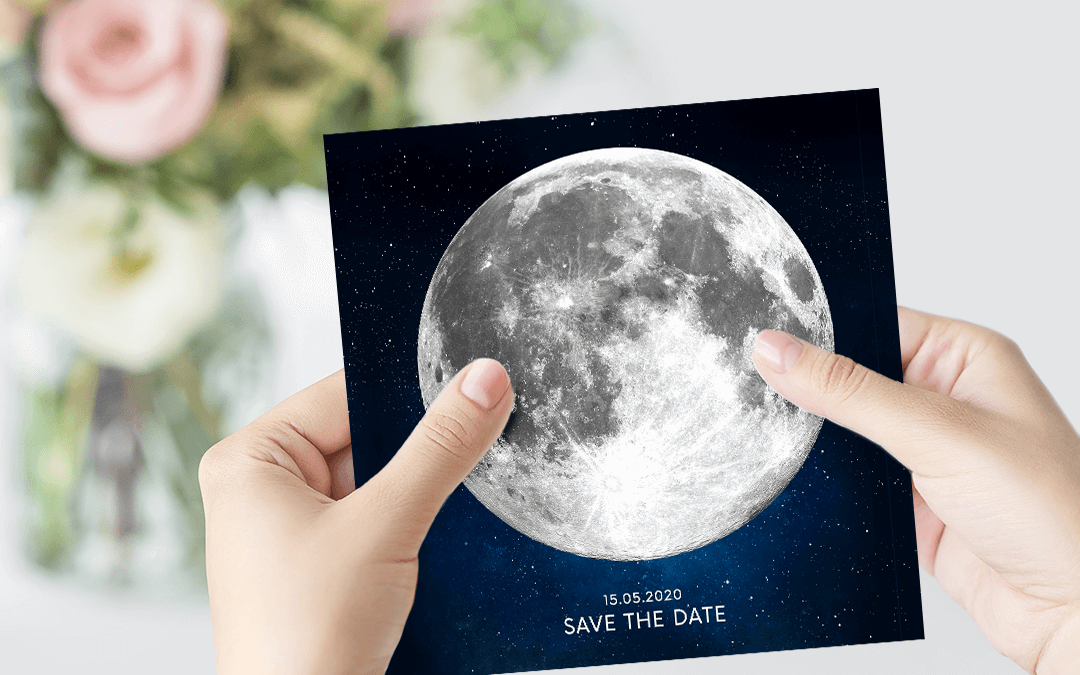
3. Wedding Invitation with a Personalized Moon Phase

Wedding Invitation with a Personalized Moon Phase
We offer a digital download file of your custom moon phase so you can order your invitations from anywhere you choose.

Your wedding invitations are a great way to weave in the celestial theme. Just like custom star maps, a personalized moon print is a recreation of what the moon looked like on a chosen date. You can use the first time you met, the night you got engaged, or even what the moon is supposed to look like on the night of your wedding. This is a great way to set the tone for your guests on your special day.

We offer a digital download file of your custom moon phase so you can order your invitations from anywhere you choose.

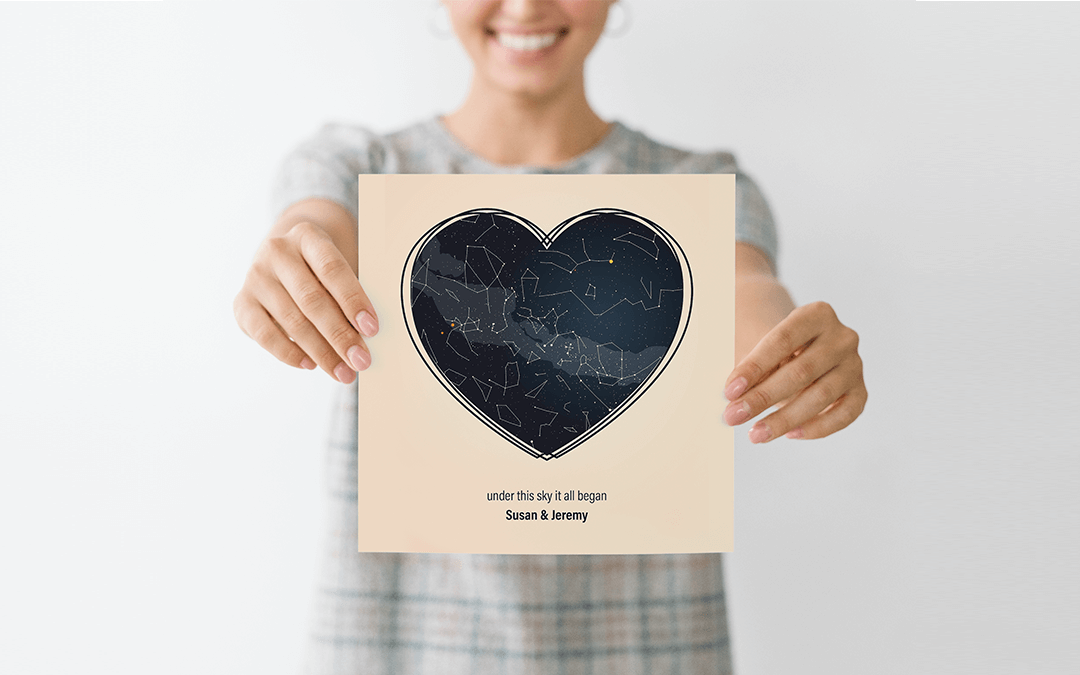
4. Celestial Wedding Invitation with Custom Star Map

Wedding Invitation with Custom Star Map
With our digital download option it makes ordering custom wedding invitations easier than ever.

Just like the moon phases invitation, you can replace the moon with a star map. Use our digital download option for faster turnaround. It makes ordering custom wedding invitations easier than ever, with little to no design knowledge required!

5. Constellation Names for Setting Arrangements

If you’re using assigned seating arrangements, use constellation names instead of table numbers. This is a fun, outside the box way to reinforce your theme and make your wedding unique. Some people prefer to have a master board that shows seating assignments, while others will add place cards to every table. The choice is yours!

6. Galaxy Ties & Bow Ties

Skip the monotone tie and add a little pizzazz to the groom’s attire. Galaxy ties add brilliant pops of color and add to the celestial wedding theme. Perfection is in the details, after all.

7. Outer Space Celestial Wedding Cake

Galaxy cakes aren’t just trending hot on Pinterest. They’re also becoming an easy favorite for weddings. The intricate swirls of color are truly out of this world and go above and beyond your traditional white layer cake. 

8. Celestial Table Setting

Star-theme table setting cards are one thing. But if you want to go above and beyond with your celestial theme (pun intended), then turn your custom star map or moon phase into a complete table setting. Order custom plates, linens, napkins, and more with your star map details printed on them. Then, save these items as a special keepsake that you bring out on anniversaries.

9. Star Map Wedding Programs

If you plan on printing a wedding program, your star map can serve as the perfect backdrop. Use sparkly colors that reflect the night sky, and even add texture or other embellishments to make every detail shine. This will be a treasured keepsake not only for you, but also your guests.

10. Personalized Moon Phase Wedding Gifts

There’s nothing wrong with telling your guests what you’d really like to have as a wedding gift. If you want a special memento from this day, consider asking someone to give you a moon phase gift. It’s a piece of art packed with meaning, and you’ll be proud to display it in the home you’re making together

Star creating your celestial wedding posters and digital files.

Posted on

11 Fun Facts about Stars You Might Not Have Known

star-facts-blog

We all know stars are (literally) out of this world. These little, bright balls of plasma have been marveled over and enjoyed for generation after generation. But just like the classic children’s song says, “How we wonder what you are.” 
Wonder no more ― these 11 facts about stars are illuminating some things you may not have known about these celestial bodies.

1. There are different types of stars.

Not all stars are like our sun. In fact, astronomers have identified at least 12 types of stars, 11 of which are identified by a letter (O, B, A, F, G, K, M, R, N, T, Y). There are also “group stars,” which form the patterns we call constellations. 

Stars are classified based on their temperature, color, and brightness. For example, R, N, T, and Y stars are cooler than O and B stars. 

2. All of the stars we see in the sky are brighter and bigger than our sun.

If you were to pick a star out of the night sky and travel as close to it as you are to our sun, you likely would not be able to see our sun from that point. All of the stars that we can currently see are both bigger and brighter than the sun. 

3. Most stars travel in clusters.

Did you know that stars have friends? It’s true! Unlike our daugther, many stars prefer to travel in clusters through the universe. This is sometimes referred to as binary stars, where two or more stars share the same center of gravity. It would be much like waking up one morning to two or more suns in the sky!

4. Dwarf stars live longer than big, powerful stars.

Dwarf stars are smaller and less potent than their giant counterparts, but this actually works to their favor. Because the high energy of larger stars is not sustainable, dwarf stars tend to live longer.

5. We can only see about 2,000 stars in the sky.

Stars on Custom Star Map Poster
The Egyptians are credited with giving us our first accurate star chart. It dates back more than 1,500 years B.C.

Look up into the sky on a dark, cloudless night and you might be inclined to think you’re looking at millions of stars. But in reality, we can only see about 2,000 stars, give or take, at any given time. It’s true that millions of stars exist in our universe, but the majority of them are too far away for us to see and are not bright enough. 

6. Stars don’t actually twinkle.

We’ve all looked skyward to see a canvas of twinkling stars some point. So you might be surprised to learn that the stars aren’t actually twinkling. This is caused by the Earth’s atmosphere. Because the stars’ light has to pass through so many layers of the atmosphere, which has varying densities, it can create a twinkling illusion. 

7. All stars are made from the same components.

Even though there are different types and sizes of stars, they all begin with the same components. Stars form from Interstellar gas, mostly hydrogen molecules. When these clouds are pushed into a spinning motion, a small mass begins to form and continues growing.The more massive gains, the hotter it becomes. And when it reaches the right temperature, nuclear fusion occurs and a star is born. 

8. Our sun is a dwarf star.

We all know that our sun is a star, and we tend to think it sets the gold standard for what a star should be. But in the grand scheme of things, our sun is a lot smaller than the majority of stars in the universe. In fact, it’s considered a dwarf star, which tends to live longer and is less powerful than an ordinary star. 

9. It would take 70,000 years to travel to the next closest star.

The closest star to Earth is about 4.2 light-years away. If you hopped aboard the fastest traveling spacecraft, it would take you 70,000 years to reach it.

10. We see stars as they looked in the past.

Because of the speed at which light travels, anything we see in the sky appears to us as it looked in the past. For example, when we look at Alpha Centauri, which is the closest star to Earth after the sun, we are looking at how it appeared more than four years ago.

11. The oldest star chart was designed in 1534 BC.

The Egyptians are credited with giving us our first accurate star chart. It dates back more than 1,500 years B.C. 

For more star-studded insights, head back to our blog or start creating your very own custom star map poster!